Measuring the Speed of Sound: Time-of-Flight
An interactive speed of sound simulation using the two-microphone time-of-flight method, with a time interval counter and an adjustable air temperature.

Interactive physics simulations covering mechanics, optics, electricity, waves, and quantum phenomena.
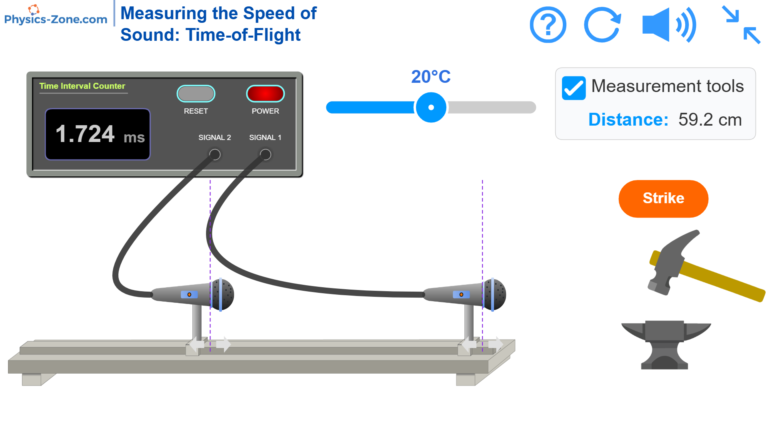
An interactive speed of sound simulation using the two-microphone time-of-flight method, with a time interval counter and an adjustable air temperature.
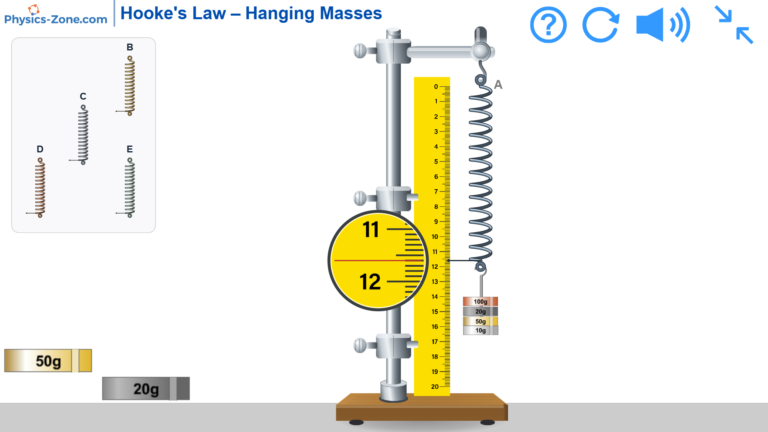
A virtual spring lab: mount one of five springs, hang slotted masses, and read the extension off the ruler. The spring constant is never shown, so students measure it themselves. Overload a spring and it stays permanently deformed.
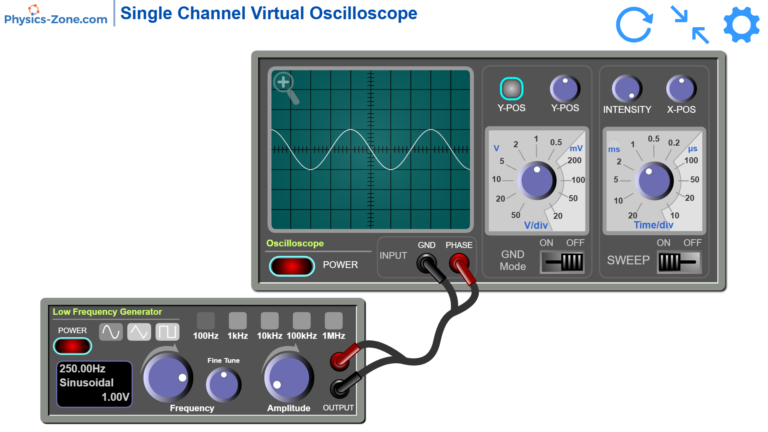
A free interactive single-channel virtual oscilloscope simulation for intermediate physics classes. Connect a function generator or DC source and observe sine, triangular, and square waveforms in real time with adjustable frequency and amplitude.
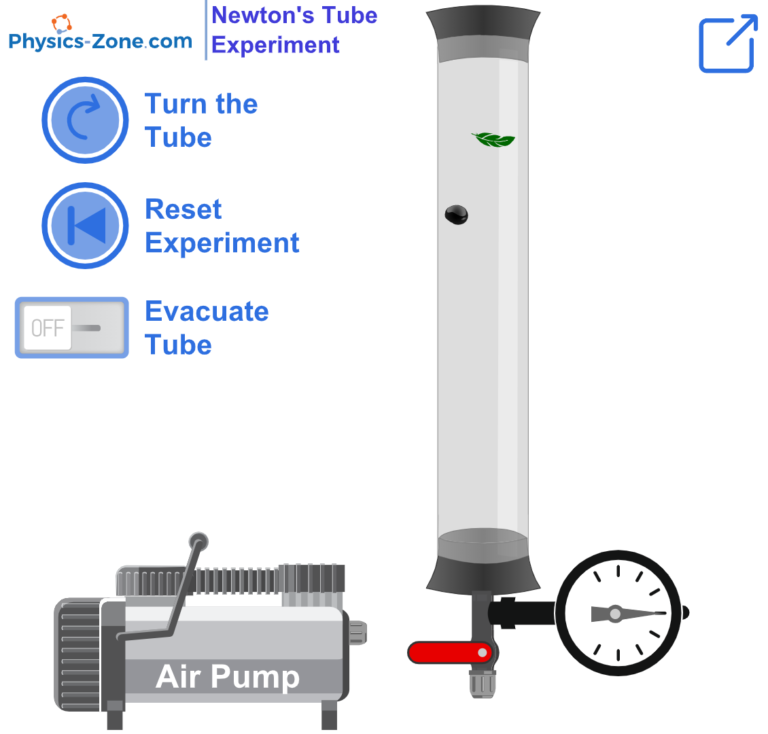
This simulation models Newton’s tube experiment, showing how air resistance affects falling objects. By removing air from the tube and flipping it, users can observe how a feather and a pebble fall differently in air but identically in a vacuum—demonstrating that gravity accelerates all objects equally when air resistance is removed.
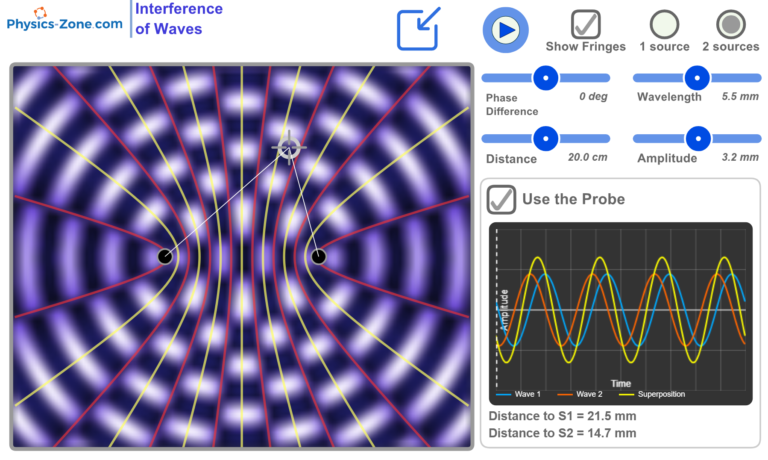
This interactive wave interference simulation demonstrates wave superposition from two coherent sources. Users can adjust wavelength, amplitude, phase difference, and source distance to observe dynamic interference patterns. A real-time probe displays both individual wave amplitudes and their combined effect, illustrating constructive and destructive interference across the field.
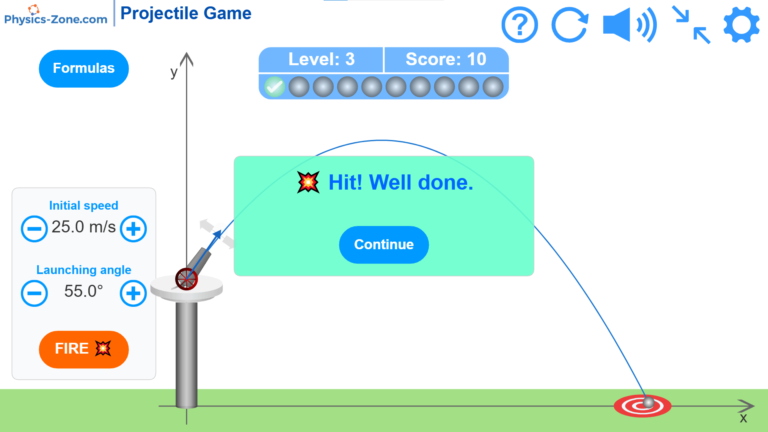
Measure the target, apply the right equation, and fire one calculated shot. Four levels of projectile motion – level ground, a wall, an elevated cannon, and an elevated target.
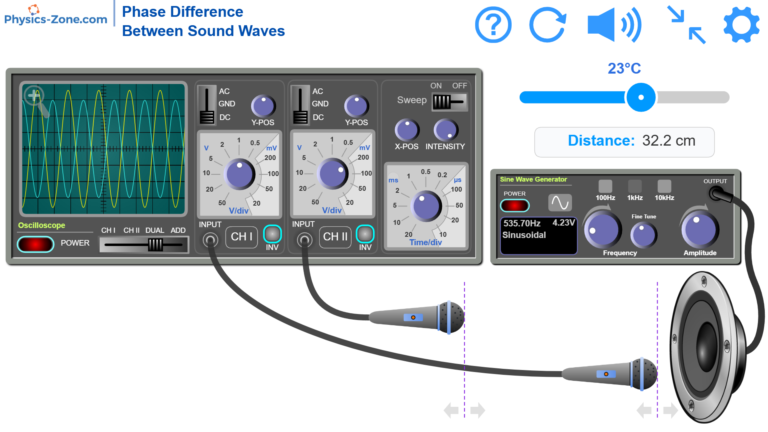
Use this interactive simulation to visualize the phase difference between two sound waves on an oscilloscope. Measure the microphone spacing and frequency to calculate the speed of sound in air.
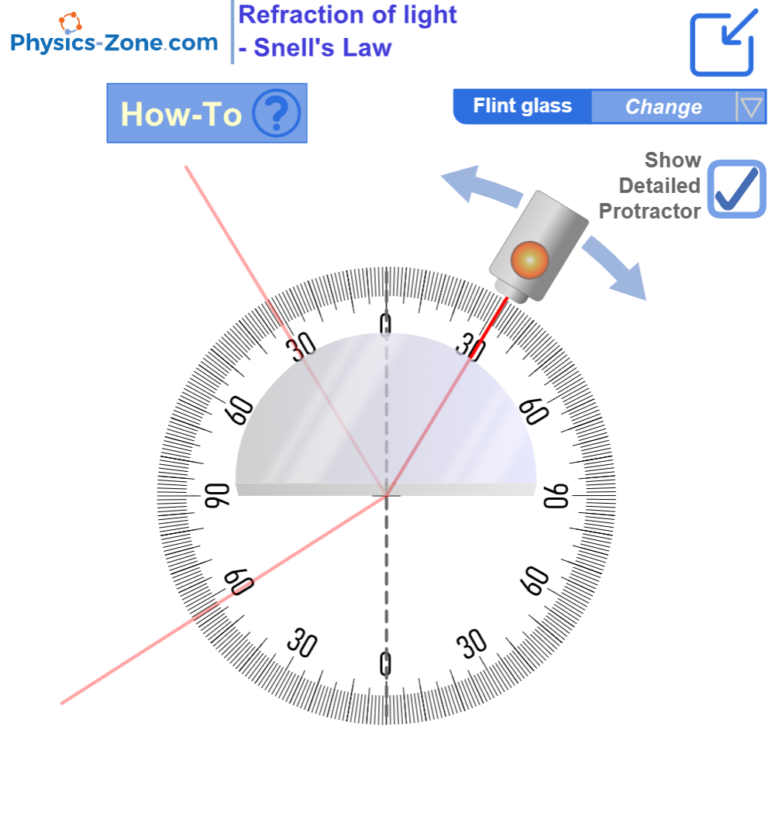
Experiment with the refraction of light as it passes from air into a transparent semi-disk. Choose different materials and apply Snell’s law to determine the index of refraction based on your measurements.
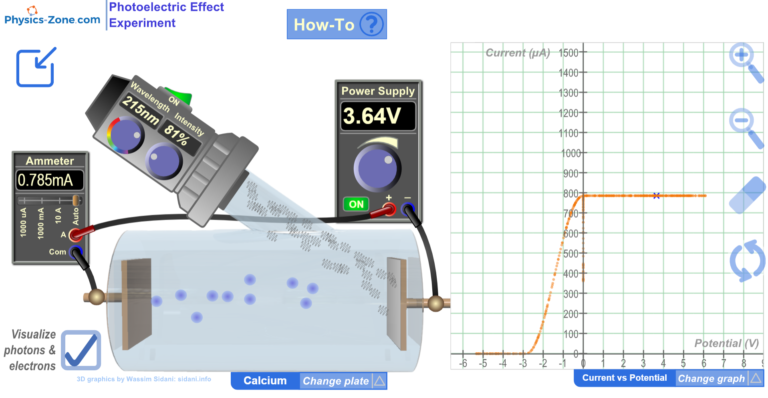
Explore the photoelectric effect with this advanced simulation. Graph photocurrent vs potential and intensity, and kinetic energy vs frequency. Adjust parameters, visualize results, and discover key quantum physics relationships interactively.
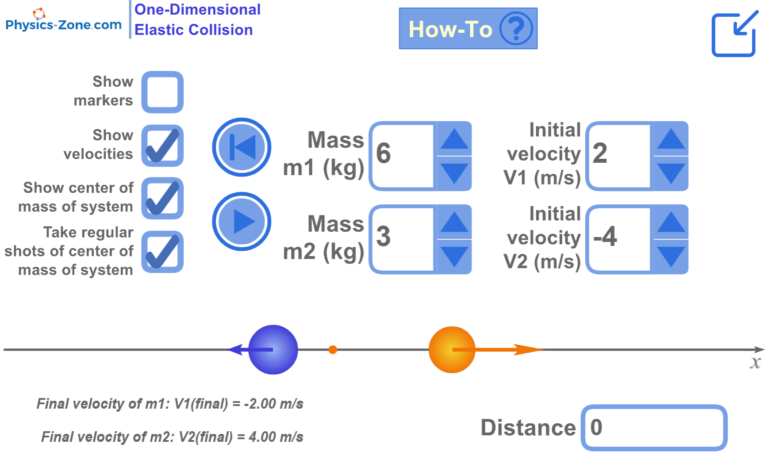
Demonstrate the conservation of linear momentum and kinetic energy in a one-dimensional elastic collision using this interactive physics simulation.